Genoa's labyrinthine alleys hide one of Europe's most underrated architectural treasures, yet most visitors miss its genius. Over 80% of cruise ship day-trippers never venture beyond the port area, unaware that this maritime republic birthed groundbreaking urban planning and palatial innovations. Architecture enthusiasts face a unique challenge here: the city's vertical topography and dense medieval layout make independent exploration overwhelming. Many return home having only glimpsed the iconic Palazzi dei Rolli facades, missing the revolutionary spatial concepts within. The frustration compounds when realizing Genoa's architectural DNA influenced everything from Venetian mansions to Spanish colonial design – knowledge locals wish more visitors understood. With 42 UNESCO-listed palaces and hidden Baroque oratories tucked between pastel tenements, the real pain point becomes curation: how to experience six centuries of genius across compact but exhausting streets without architectural fatigue setting in by noon.
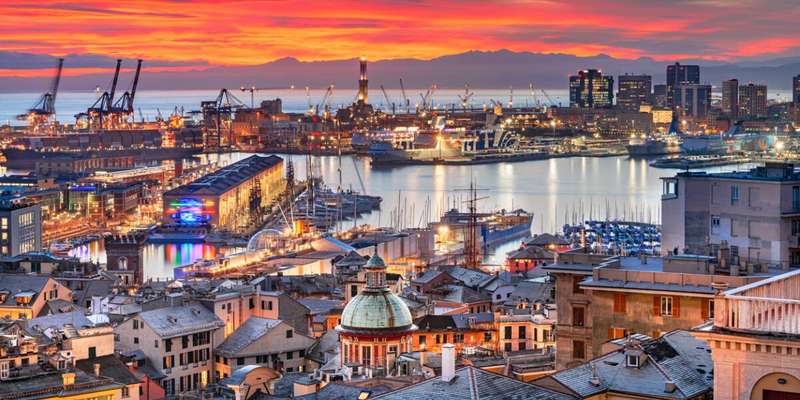
Navigating Genoa's layered architectural eras without getting lost
Genoa's urban fabric resembles a living archaeology site, where 12th-century gates frame Renaissance loggias and Art Nouveau elevators hide behind medieval facades. The key to appreciation lies in understanding the city's vertical zoning – merchants built upward as republic-era wealth demanded more space within the fortified walls. Start at the Cathedral of San Lorenzo to witness Romanesque stripes transitioning to Gothic portals, then let Via Garibaldi (once Strada Nuova) reveal how 16th-century architects like Galeazzo Alessi revolutionized palace design with internal courtyards and hanging gardens. A little-known local trick: use the public elevators (like the iconic Castelletto lift) to gain instant panoramic perspectives of this layering effect. Free municipal maps mark these time-saving vertical shortcuts most tourists miss. For DIY explorers, the 'Rolli Days' app pinpoints all UNESCO palaces with historical context, though entrance queues form quickly at star sites like Palazzo Rosso.
UPDATES FOR YEAR 2026
Modern Logistics and UNESCO Anniversary Access Updates
Navigating the Strada Nuova district now requires awareness of the newly unified ticketing and digital reservation systems. To celebrate the twentieth anniversary of the city's UNESCO status, a centralized booking portal on the official tourism website has become mandatory for interior tours of the Rolli Palaces, replacing the older walk-in culture. The updated Museum Card now offers an all-in-one digital solution, granting entry to 28 sites while integrating unlimited travel on the city’s iconic public lifts and funiculars. Visitors should specifically look for the 'Palazzi in Luce' programming, which features rare evening illuminations of frescoed ceilings. Furthermore, the fully restored Palazzo Rosso has expanded its tour route to include the 'mezzarie' private apartments, offering a fresh perspective on Baroque domestic life that was previously off-limits to the public.
View all Tours
Secret masterpieces even guidebooks overlook
Beyond the Rolli palaces, Genoa guards architectural surprises requiring local insight to uncover. The Maddalena district hides Carlo Barabino's neoclassical Teatro Carlo Felice, whose perfect acoustics stem from an elliptical design predating modern sound engineering. Nearby, Palazzo Imperiale's double-helix staircase rivals Bramante's Vatican masterpiece yet sees 1/100th the visitors. Architecture students quietly frequent Santa Maria di Castello's cloister, where Gothic and Renaissance elements merge seamlessly around a 15th-century wellhead. For modernist gems, the waterfront's Boccadasse neighborhood reveals how early 20th-century architects reinterpreted traditional ligurian trompe-l'oeil techniques. These off-radar sites require no tickets, just timing – early mornings or late afternoons avoid both crowds and the harsh midday light that flattens facade details. A little-known regulation allows free access to many lesser Rolli palaces during business hours if you politely ask custodians.
View all Tours
Decoding Genoa's unique construction innovations
What truly sets Genoa apart are ingenious solutions to its geophysical constraints. The 17th-century Palazzo Balbi Senarega pioneered 'skyscraper' techniques with its nine-story structure built on a steep slope – notice how stairwells align with load-bearing walls. At Palazzo Doria Tursi, architects cantilevered rooms over the street to maximize space, creating those characteristic 'pouched' facades. The real marvel lies in the materials: local pink slate (ardesia) used for roofing influenced entire Mediterranean port architecture. For hands-on understanding, visit the Galata Maritime Museum to see how shipbuilding techniques translated to palatial construction. Free city-sponsored 'Architecture Walks' (Wednesdays and Saturdays) demonstrate how builders used 'creuza' alley gradients for natural drainage – a system still functional today. These features become invisible without context, which explains why specialized guides dramatically enhance appreciation.
View all Tours
Timing your visit for optimal light and access
Genoa's narrow caruggi (alleys) create dramatic light conditions that transform architectural perception. The gold-leaf interiors of San Matteo piazza buildings glow intensely between 3-5 PM when sunlight penetrates the canyon-like streets. Conversely, the Strada Nuova palaces reveal their frescoed ceilings best in morning light. Locals know that October offers ideal conditions: summer crowds have dispersed, yet the sea-reflected light remains strong enough to illuminate Baroque stucco details. Many don't realize that Rolli Palace interiors often close for restoration in winter, while spring brings unpredictable rains that make steep alleys slippery. The municipal 'Rolli Card' (€15 for 24 hours) provides queue-free access to major sites, but purchasing online requires precise timing – slots often sell out for prime viewing hours. For photography enthusiasts, golden hour at the Porta Soprana towers captures the essence of Genoa's architectural duality: medieval fortifications framing Renaissance elegance.
View all Tours
FAQ 2026
What are the confirmed dates for the Rolli Days in 2026?
Genoa will host the Spring edition of Rolli Days from March 27–29, 2026, focused on 'The Golden Age,' followed by an Autumn edition from October 16–18, 2026, which highlights suburban villas.
How much does the Genoa Museum Card cost in 2026?
As of early 2026, the 24-hour Museum Card is priced at €24 and the 48-hour version at €45. Both cards include admission to over 25 museums and full access to the AMT public transport network, including lifts and funiculars.
Is advance booking required for architectural sites in Genoa during 2026?
Yes, for the 2026 anniversary events and all Rolli Days, digital reservations are mandatory through the Visit Genoa portal. For standard museum visits, online booking is highly recommended to secure access to popular rooftop terraces like those at Palazzo Rosso.
Written by Genoa Tours Editorial Team & Licensed Local Experts.
Last updated: 24/02/26
