Genoa's UNESCO-listed treasures remain frustratingly elusive for many visitors. Over 70% of day-trippers miss the city's most significant historical gems, according to local tourism boards, often overwhelmed by the labyrinthine old town's complexity or deterred by long queues at key sites. The problem runs deeper than simple navigation – without context, the Renaissance palazzos and medieval gateways become mere facades, their stories locked away. This disconnect leaves travelers with superficial experiences in a city that rewards deeper exploration, where every arched doorway reveals centuries of maritime history. The emotional toll manifests in rushed itineraries, missed photo opportunities at golden hour when the alleys glow, and that lingering sense of having skimmed the surface of Italy's most underrated cultural destination.
Navigating Genoa's maze-like centro storico without wasting hours
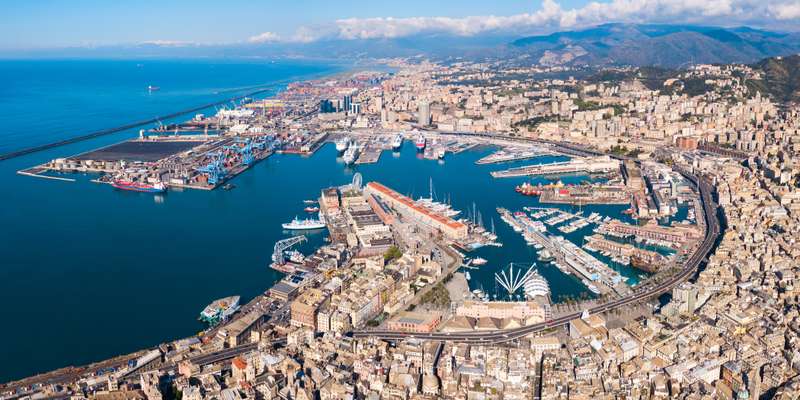
Genoa's historic center, Europe's largest medieval quarter, deliberately disoriented invaders with its caruggi (narrow alleys) – a design that now challenges even GPS-equipped travelers. The secret lies in understanding the subtle logic behind the apparent chaos. Start at Piazza De Ferrari, where nine main arteries diverge like spokes, each leading to distinct UNESCO clusters. Watch for subtle architectural cues: vaulted passages indicate merchant routes to the old port, while sloping alleys marked with red-and-white plaques trace the ancient salt roads. Locals recommend the 'three towers' method – keeping at least one of the landmark towers (Grimaldina, Embriaci, or the Cathedral bell tower) in sight for orientation. Morning light helps too; the east-west alignment of Via Garibaldi means sunlight angles through specific cross-streets at predictable times, creating natural navigation aids.
View all Tours
Decoding the Palazzi dei Rolli's hidden hierarchy
Those 42 identical-looking Renaissance palaces on UNESCO's list hold a sophisticated ranking system most visitors miss. The Rolli system classified palaces by size and grandeur to host visiting dignitaries appropriately – a three-story facade with triple windows (like Palazzo Rosso) signaled top-tier accommodation for cardinals, while modest two-story buildings welcomed merchants. Look for stone plaques near doorways showing assigned numbers (like 'R5' for fifth-rank). Inside, ceiling height reveals status; the most powerful families competed by adding hidden mezzanines to technically comply with height restrictions while impressing guests. Local guides share an insider trick: check courtyard wells. The wealthiest families installed elaborate marble wells (like Palazzo Doria-Tursi's octagonal masterpiece) as permanent status symbols, while simpler brick wells indicated newer money trying to keep up.
View all Tours
Timing your visit to avoid cruise ship crowds
Genoa's UNESCO sites suffer from predictable waves of visitors – 83% arrive between 10 AM and 2 PM on port days, according to harbor master logs. Savvy travelers use two local strategies: the 'tidal' approach and the 'reverse itinerary'. The tidal method means arriving at key sites (like Palazzo Reale) either before 9:30 AM when the first ships dock or after 3 PM when groups return for boarding. The reverse itinerary starts at typically crowded end points (Strada Nuova museums) when others are beginning at the port-side landmarks. Wednesday mornings see 40% fewer visitors due to most Mediterranean cruise schedules. For photography enthusiasts, late afternoons offer empty courtyards in the Rolli district, when golden light filters through the alleys at perfect angles for capturing the palaces' intricate details.
UPDATES FOR YEAR 2026
New Access Protocols: Mandatory Digital Booking and Anniversary Events
The visiting process for the Strade Nuove has transitioned to a digital-first model to commemorate the 20th anniversary of its UNESCO listing. For the hallmark spring event, scheduled for late March, visitors must secure time-slot reservations through the official municipal portal, as capacity limits are strictly enforced to protect the delicate frescoes. The Genova Museum Card remains the essential tool for navigation, now offering an integrated QR code for both museum entry and the AMT public transport network. Travelers should be aware of seasonal maintenance: while the majority of the Rolli palaces are open, specific sites like Palazzo Reale are undergoing lighting upgrades early in the year, which may temporarily limit access to certain floors. To avoid fines, drivers must ensure their license plates are registered in the 'white list' by their hotel before entering the historic center's restricted traffic zone (ZTL), which now utilizes enhanced automated sensors.
View all Tours
Combining UNESCO sites with authentic local experiences
The true magic of Genoa's heritage emerges when paired with living traditions. Near Palazzo San Giorgio, morning visits coincide with bakers pulling focaccia from wood-fired ovens – the perfect accompaniment to stories of medieval commerce. Time your Palazzo Ducale exploration to finish as the nearby Carlo Felice opera house opens; attendants often let visitors peek at the gilt interiors during rehearsals. Local guides know which palazzi still host artisan workshops (like the silk weavers in Palazzo Lomellino's basement) and when you might catch impromptu concerts in hidden courtyards. The key is treating the UNESCO sites not as frozen exhibits but as parts of a working city, where history lives in the scent of fresh pesto wafting from open windows and the clatter of espresso cups in vaulted cafes that once served Genoese bankers.
View all Tours
FAQ 2026
When are the Spring Rolli Days scheduled for 2026?
The spring edition of Rolli Days in 2026 is scheduled for March 27, 28, and 29. These dates celebrate the 20th anniversary of Genoa's UNESCO World Heritage status under the theme 'Sharing is Protecting,' and require advance digital booking for most participating private palaces.
What is the updated cost of the Genova Museum Card in 2026?
As of January 1, 2026, the Genova Museum Card is priced at €24 for a 24-hour pass and €45 for a 48-hour pass. This card provides one-time access to 25 city museums, including the major UNESCO-listed Palazzi dei Rolli on Via Garibaldi, and includes unlimited use of the city's public transport system.
Are digital reservations mandatory for the Palazzi dei Rolli in 2026?
Yes, for high-traffic events like Rolli Days and for specific top-tier sites such as the Palazzo Rosso and the restricted sections of Palazzo Reale, mandatory digital reservations are required in 2026. Visitors are encouraged to book at least 24 to 48 hours in advance via the official VisitGenoa platform.
Written by Genoa Tours Editorial Team & Licensed Local Experts.
Last updated: 24/02/26
